
Parmarth Nasha Mukti Kendra offers supportive addiction recovery care in Delhi with personalized guidance, counselling, and rehabilitation support.
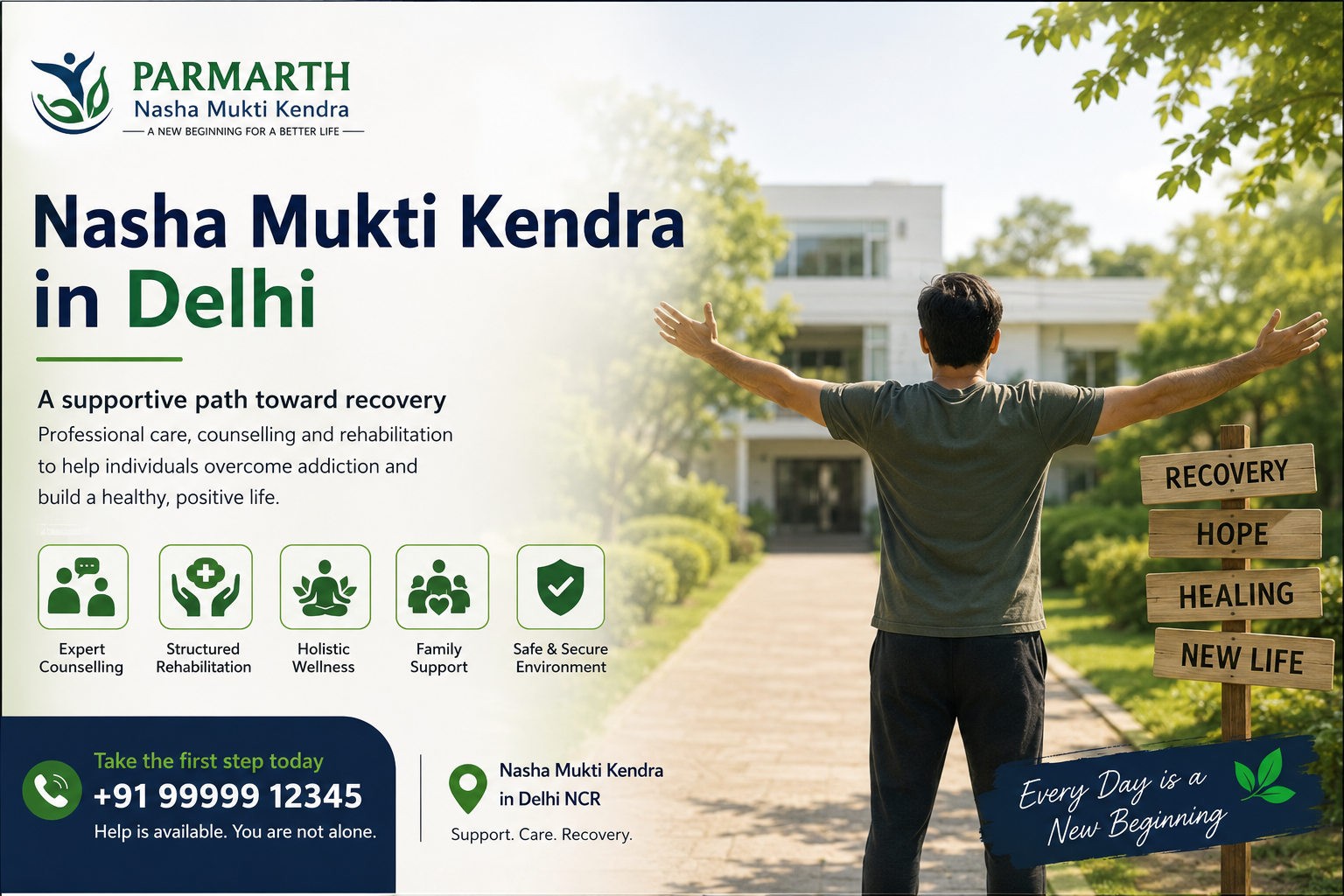
Nasha Mukti Kendra in Delhi – A Supportive Path Toward Recovery
Finding the right Nasha Mukti Kendra in Delhi can be an important step for a person struggling with alcohol or substance dependence. Addiction can affect physical health, emotional well-being, relationships, education, work, and everyday life. With appropriate professional support and a structured environment, individuals can work toward healthier routines and long-term recovery.
Parmarth Nasha Mukti Kendra focuses on creating a supportive setting where individuals can receive guidance, counselling, rehabilitation support, and encouragement throughout their recovery journey. Every person has a different background and different recovery needs, so care should be approached with understanding, patience, and respect.
Why Choose a Nasha Mukti Kendra in Delhi?
Delhi has access to a wide range of healthcare and rehabilitation services, making it easier for families to explore professional addiction recovery support. Choosing a suitable rehabilitation centre in Delhi can provide a structured environment away from some of the situations, habits, and triggers associated with substance use.
A professional rehabilitation setting can also help individuals develop healthier daily routines. Counselling and behavioural support may help them understand the factors connected with addiction and identify practical ways to manage challenges during recovery.
For families searching for a Nasha Mukti Kendra near Delhi, it is important to consider the centre's approach, staff, facilities, counselling support, safety standards, and suitability for the individual's needs rather than making a decision based only on advertisements or promises.
Understanding Addiction and Recovery
Addiction is more than simply a habit that someone can stop through willpower. Substance dependence can involve physical, psychological, behavioural, and social factors. This is why recovery may require consistent support rather than a quick solution.
At Parmarth Nasha Mukti Kendra, the focus is on helping individuals understand their situation and gradually build healthier patterns. Counselling can provide an opportunity to discuss personal concerns, emotional challenges, family relationships, and situations that may contribute to substance use.
Recovery is not identical for everyone. Some people may require more intensive medical attention, while others may benefit primarily from counselling and rehabilitation support. Where medical or psychiatric care is required, professional assessment should guide the treatment process.
Supportive Counselling for Lasting Change
Counselling can be an important part of addiction recovery. It gives individuals a safe and respectful space to discuss difficulties without unnecessary judgment.
Through structured counselling, individuals may work on:
Understanding addictive behaviours
Recognising personal triggers
Developing healthier coping strategies
Improving communication skills
Managing emotional challenges
Building positive daily routines
Preparing for life after rehabilitation
The purpose is not simply to focus on stopping substance use but also to encourage healthier decision-making and constructive habits that can support recovery over time.
A Structured Rehabilitation Environment
A consistent routine can make the recovery process more organised. A drug rehabilitation centre in Delhi may provide a planned environment where individuals can focus on recovery while receiving regular guidance.
Daily activities may include counselling sessions, group interactions, recreational activities, wellness routines, and other recovery-focused programs depending on individual requirements and the centre's care plan.
Family involvement can also be valuable. Addiction often affects the entire family, and appropriate family counselling can help relatives better understand recovery, communication, boundaries, and ways to provide constructive support.
Choosing the Right Rehabilitation Centre in Delhi
Before selecting a Nasha Mukti Kendra in Delhi, families should take time to understand the services available. Consider factors such as:
Professional and trained staff
Appropriate counselling facilities
Safe and hygienic surroundings
Individualised recovery planning
Family counselling options
Clear information about the rehabilitation process
Appropriate referral or medical support when necessary
Transparent communication with families
Families should also ask questions about the centre's approach, duration of programs, admission requirements, aftercare planning, and how emergencies are handled.
Recovery Does Not End After Rehabilitation
Completing a rehabilitation program is an important milestone, but maintaining recovery can require continued effort. Returning to familiar surroundings may bring new challenges and triggers.
Aftercare planning can help individuals continue applying the skills learned during rehabilitation. Ongoing counselling, family support, healthy routines, peer support, and professional follow-up can all play a role in maintaining progress.
For people looking for Nasha Mukti Kendra in Delhi NCR, considering aftercare support is therefore just as important as understanding the initial rehabilitation program.
Parmarth Nasha Mukti Kendra – Support With Understanding
Parmarth Nasha Mukti Kendra aims to provide a respectful and structured environment for individuals seeking help with addiction-related concerns. The focus is on guidance, counselling, rehabilitation support, and encouraging healthier ways of living.
If you or a family member is struggling with alcohol or substance dependence, seeking professional advice can be a meaningful first step. Recovery can take time, and asking for help should be viewed as a sign of taking responsibility for one's well-being—not as a weakness.
Frequently Asked Questions
1. What is a Nasha Mukti Kendra?
A Nasha Mukti Kendra is a rehabilitation facility that provides structured support for individuals experiencing problems related to alcohol or substance use. Services may include counselling, behavioural support, rehabilitation activities, and recovery planning.
2. How do I choose the best Nasha Mukti Kendra in Delhi?
Look for a centre with appropriate professional support, trained staff, safe facilities, counselling services, transparent communication, and a recovery approach suited to the individual's circumstances.
3. How long does addiction recovery take?
Recovery time varies from person to person. It can depend on the substance involved, duration and severity of dependence, physical and mental health, personal circumstances, and the type of support required.
4. Can families participate in the recovery process?
Yes. Family involvement can be helpful in many recovery situations. Family counselling may help relatives understand addiction and learn healthier ways to communicate and provide support.
5. Is rehabilitation enough to prevent relapse?
No rehabilitation program can guarantee that relapse will never happen. Continued support, aftercare, counselling, healthy routines, and professional follow-up can help individuals manage challenges and maintain recovery.
6. What should I do if someone needs urgent medical help?
If a person has a serious medical or psychiatric emergency, immediate medical attention should be sought from an appropriate emergency healthcare service. A rehabilitation centre should not replace emergency medical care when urgent treatment is required.
Leave a Comment
Cancel ReplyAll Comments